24/7 grease trap & interceptor service

Grease Trap Cleaning Long Beach CA

We handle grease trap cleaning Long Beach CA kitchens rely on, from small under-sink units on Retro Row to large in-ground interceptors near the waterfront. Our crews pump, scrape and inspect each device, then leave a signed manifest you can show the next health inspector. Call to set up one-time grease trap cleaning or a recurring route.

Call (424) 573-8021Dispatch answers day and night
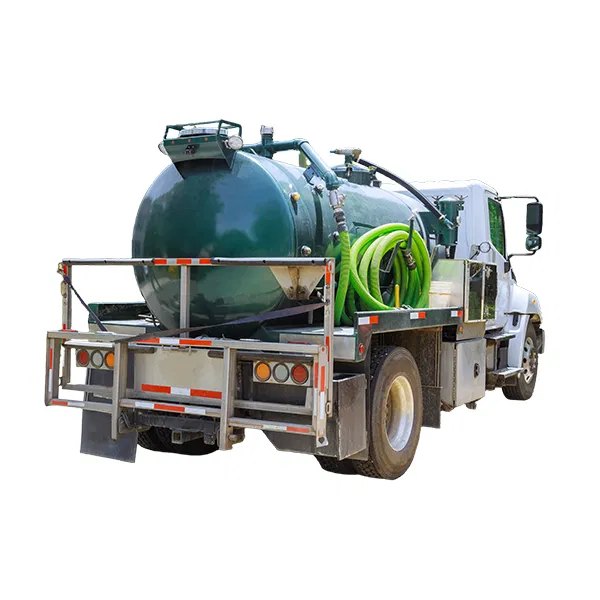
Grease Trap Cleaning Long Beach CA vacuum pump truck with suction hose ready for a kitchen grease trap pump-out

Grease layer close to the outlet tee? A dispatcher can help right now.

Call (424) 573-8021

Grease Trap Cleaning Long Beach CA and the city's grease management rules

Long Beach is one of the few California cities with its own health department, and grease control here runs through the Grease Management Program of the Bureau of Environmental Health inside the Department of Health and Human Services. Environmental Health inspectors visit food facilities and enforce the maintenance and monitoring requirements meant to keep fats, oils and grease out of the municipal wastewater collection system.

The sewer pipes themselves belong to Long Beach Utilities, the former Long Beach Water Department, which reviews grease trap and grease interceptor plans for new construction and remodels and takes industrial wastewater discharge permit requests. Flow then heads to Sanitation Districts of Los Angeles County treatment plants, so larger or unusual dischargers can also fall under the Districts' wastewater ordinance and permit rules.

The working benchmark inspectors use is the 25 percent rule: once floating grease plus settled food solids fill a quarter of a device's liquid depth, it is due for grease trap pumping, whatever the calendar says. We measure before and after every visit.

Paperwork matters as much as the pump-out. Keep each hauler manifest, service date, gallons removed and the condition notes on site where an inspector can see them, together with your kitchen BMP log for scraping plates, using drain screens and storing used fryer oil in a covered bin. Behind all of this sits the State Water Board's statewide sanitary sewer systems order, which requires sewer owners such as Long Beach to run FOG source control as part of their sewer system management plans.

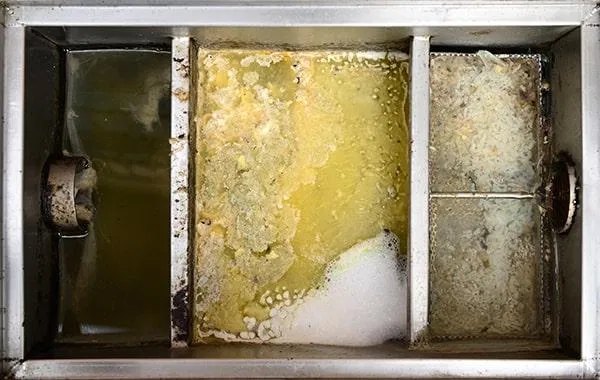
Stainless steel grease trap with baffles and compartments in a Long Beach restaurant kitchen

Pump-out coming due? A single call puts you on the route.

Call (424) 573-8021

Long Beach grease trap demand by neighborhood

Belmont Shore's Second Street packs burger bars, brunch spots, pizza ovens and sushi counters into narrow storefronts with small traps tucked under prep sinks. Weekend crowds push those units to the 25 percent line quickly, and fryer-heavy menus leave a thick cap of tallow.

Downtown along Pine Avenue and around The Pike, gastropubs, steakhouses and hotel kitchens tied to the Convention and Entertainment Center run larger in-ground interceptors. Banquet prep sends butter, cream sauces and roasting fat through the line in bursts, so these devices need planned pumping before big conventions rather than after.

Cambodia Town on Anaheim Street is a different load entirely. Khmer noodle shops simmer pork and beef bone broths all day, bakeries fry num kong, and seafood kitchens wash woks constantly, which puts emulsified fat and fine starch into the trap. Further north, Bixby Knolls along Atlantic Avenue mixes taquerias, cafes and family restaurants, where carnitas lard and coffee grounds settle into a dense bottom layer.

Shoreline Village and the Queen Mary area add seafood fry stations and tourist volume that swings with the cruise schedule, while Retro Row on Fourth Street and the Traffic Circle plazas bring vegan kitchens, donut shops and chain fast food. Each pattern changes how we time grease interceptor cleaning and how much solid material we scrape from the walls.
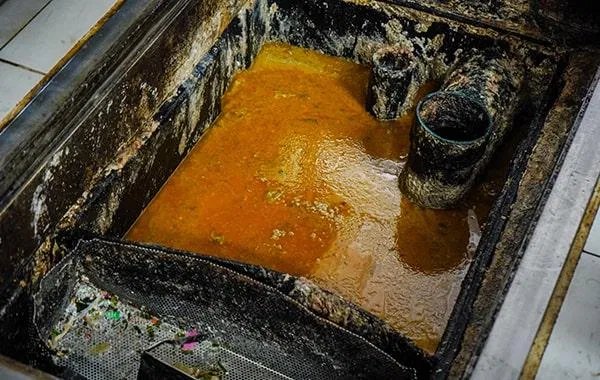
Open grease trap with orange grease layer and pipes at a Long Beach food service business

Floor sink backing up mid-service? Trucks roll day and night.

Call (424) 573-8021

Event weekends, the port and Long Beach grease trap scheduling

The Acura Grand Prix of Long Beach each April turns downtown streets into a racetrack, closes curb lanes and cuts off the alleys our trucks use. Restaurants near Ocean Boulevard and Shoreline Drive should book service the week before race weekend, because grease volume spikes during the event and access disappears once barriers go up.

The Port of Long Beach and the industrial corridor along the Los Angeles River hold commissaries, catering kitchens, cold storage and employee cafeterias that cook for shift workers around the clock. Those sites often have large gravity interceptors in truck yards, and service has to fit between deliveries and gate rules, so we confirm access windows first.

Cal State Long Beach dining halls, Long Beach Memorial and other hospital kitchens, and Long Beach Airport concessions all run high-volume cafeterias with strict hours. Low-flow fixtures leave less water to carry grease, so fat concentrates in the device and older clay laterals. Short, regular intervals work better here than stretching to the limit.

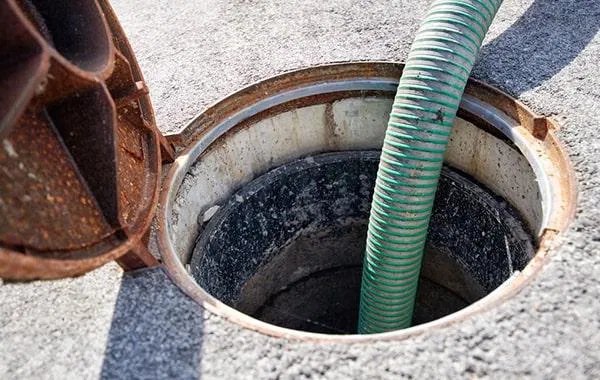
Manhole grease interceptor with green suction hose during service at a Long Beach commercial site

FOG inspection on the calendar? Book the pump-out before it.

Call (424) 573-8021

What a Long Beach grease trap service visit includes

Most Long Beach grease trap cleaning visits take place before opening or after close so the kitchen keeps cooking. We work around Belmont Shore parking limits, downtown loading zones and alley access by calling ahead, and we leave the area clean and the lids secure.

You get a written record of what was removed and what we saw, ready for Environmental Health inspectors or a property manager asking for proof of maintenance.

  • Measure grease and solids depth against the 25 percent rule before pumping
  • Pump the full volume, scrape walls, lids and baffles, and remove settled solids
  • Check inlet and outlet tees, baffles, gaskets and the sample point
  • Note slow drains, odors or damage and photograph problem areas
  • Provide a signed manifest with gallons removed and the disposal destination
  • Suggest a service interval based on your menu and volume

Prefer service after closing? Overnight crews are standard.

Call (424) 573-8021

Grease Trap Pumping in Long Beach, CA

Small under-sink and floor traps are common in Belmont Shore cafes, Cambodia Town noodle shops and downtown bars. We pump the full contents, scrape the baffles and lid, check the flow-control fitting, and reset the trap so it holds water and grease properly. Short intervals keep these compact units below the 25 percent line inspectors check against.

How grease trap pumping works →

Grease Interceptor Cleaning in Long Beach, CA

Large in-ground interceptors at hotels near the Convention Center, Port of Long Beach cafeterias and hospital kitchens collect hardened grease mats and heavy solids. We break up the cap, scrape walls and baffles, flush the compartments, and inspect tees and risers for corrosion or cracks, then document anything that needs repair before the next inspection.

How interceptor cleaning works →

Grease Interceptor Pumping in Long Beach, CA

For gravity interceptors in shopping centers, campus dining halls and food courts across Long Beach, our vacuum trucks remove the full liquid volume and settled solids in one visit. Each pump-out gets a manifest listing gallons removed and the receiving facility, so property managers and tenants have the documentation the city expects.

How interceptor pumping works →

Want a complete evacuation and a signed manifest? Give us a call.

Call (424) 573-8021

Our Long Beach grease trap service area

We cover the whole city, from Naples, Belmont Shore and Alamitos Beach to downtown, the Westside industrial area, North Long Beach and Bixby Knolls. Waterfront hotels, Pine Avenue restaurants, Cambodia Town kitchens, campus dining and port-area cafeterias are all on our regular routes, and we schedule early morning or late night visits when your hours require it.

Unsure how big your interceptor is? A technician can talk it through.

Call (424) 573-8021

Grease Trap Cleaning Long Beach CA: frequently asked questions

What does the Grease Management Program at the Bureau of Environmental Health actually look for during a visit?

Inspectors with the Long Beach Bureau of Environmental Health check that your grease control device is maintained and monitored. Expect them to look at grease and solids levels, the condition of baffles and lids, your pump-out manifests and service dates, and kitchen habits such as plate scraping and oil storage. Having recent records on hand usually makes the visit quick.

What drives the price of a pump-out for a Belmont Shore cafe compared with a downtown hotel interceptor?

Price depends mostly on device size and gallons removed, how much hardened grease has built up, access, and timing. A small under-sink trap on Second Street is a short job, while a 1,500-gallon interceptor in a hotel loading dock needs a vacuum truck and more disposal volume. After-hours visits and long gaps between services also add cost.

Is used fryer oil from a Pine Avenue restaurant handled the same way as the waste we pump from its trap?

No. Used fryer oil, often called yellow grease, is collected in a covered bin and picked up by a registered inedible kitchen grease transporter for recycling. Trap and interceptor waste, sometimes called brown grease, is a water, fat and solids mix hauled as liquid waste. Long Beach Environmental Health even keeps a list of waste cooking oil collectors.

What happens to a Long Beach food facility that keeps ignoring grease maintenance?

Repeated violations can lead to written notices, reinspection fees, required corrective action, and possible permit or code enforcement from the city. If grease from your line causes a sewer overflow, you may also face cleanup costs. The simplest protection is regular service and a file of manifests showing your device stays under the 25 percent limit.

Does Long Beach Utilities need to approve a grease interceptor before we remodel a kitchen?

Yes, Long Beach Utilities lists grease trap and grease interceptor plan check among its development services, so new installations and changes to existing devices go through review. Your architect or plumber handles the submittal. Once the device is installed, we can set an opening pump-out schedule based on its rated capacity and your menu.

Why do Cambodia Town noodle shops on Anaheim Street fill their traps so fast?

Long-simmered pork and beef broths release fat that emulsifies in hot water, and constant wok and bowl washing pushes it through quickly. Fried pastries and seafood prep add oil and fine solids. Many Anaheim Street kitchens do best on short intervals, and we measure each visit to confirm the timing still fits.

Should restaurants near Ocean Boulevard book service before the Grand Prix of Long Beach?

Yes. Street closures and barriers limit truck access for days around the April race, and the extra crowds load your trap heavily. We recommend pumping the week before and scheduling a follow-up visit after the weekend, so you start and finish the event with a clean device and no access problems.

Do Shoreline Village and Queen Mary area kitchens need different service from inland restaurants?

Waterfront kitchens see big swings with cruise ship days, summer weekends and events, plus heavy fried seafood volume. Many sit in shared buildings with interceptors serving several tenants. We plan pumping around peak tourist periods and check that the device can handle the surge, rather than relying on a fixed calendar alone.

Can you service grease interceptors at port-area cafeterias with gate and security rules?

Yes. Kitchens serving terminal workers and logistics companies near the Port of Long Beach often have security checkpoints, truck traffic and tight access windows. We coordinate in advance with your facility contact, confirm truck clearance and parking, and schedule pump-outs between shift changes so the cafeteria and yard keep running.

How do CSULB dining halls and food courts plan grease service around the academic calendar?

Cal State Long Beach dining operations swing from heavy fall and spring loads to quiet summers. We suggest deep interceptor service just before move-in, mid-semester checks during peak weeks, and a full cleanout at the start of breaks. That timing matches grease buildup to actual meal counts instead of a flat schedule.

Why does an older Bixby Knolls building get grease backups even with regular pumping?

Many Atlantic Avenue buildings have aging clay or cast iron laterals with roots, sags or offsets where grease collects past the trap. Low-flow fixtures also leave less water to carry fat away. If backups continue after service, we note it on the report so you can have the line checked and cleared.

Does the Long Beach 25 percent rule apply to small under-sink traps on Retro Row?

Yes. The 25 percent benchmark the Long Beach health department illustrates applies to grease control devices generally, so a small hydromechanical unit at a Fourth Street cafe still needs pumping once grease and solids reach a quarter of its depth. Small units hit that point quickly, sometimes every few weeks, so frequent service is normal.

Truck, crew and manifest, all arranged in one phone call.

Call (424) 573-8021

Grease trap service in cities near Long Beach

Our crews also handle grease trap cleaning in neighboring South Bay, Gateway Cities and Orange County communities. Choose a city below to see local grease rules and service details.

Sinks draining slowly at the dish station? Call before it overflows.

Call (424) 573-8021
Call now