24/7 grease trap & interceptor service

Grease Trap Cleaning West Covina CA

Our crews handle grease trap cleaning West Covina CA restaurants count on, from noodle houses on Azusa Avenue to chain kitchens near Plaza West Covina. We pump under-sink traps and in-ground interceptors, scrape baffles, and hand you a manifest that stands up when an inspector asks for it.

Call (424) 573-8021Dispatch answers day and night
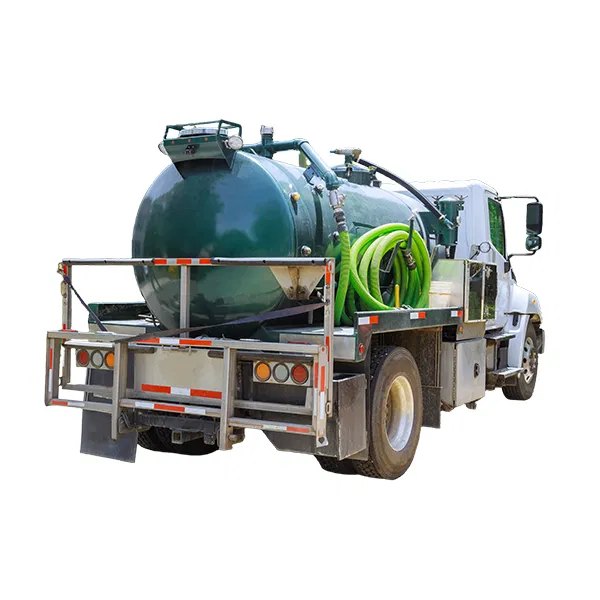
Grease Trap Cleaning West Covina CA vacuum pump truck with suction hose ready for a kitchen grease trap pump-out

Grease layer close to the outlet tee? A dispatcher can help right now.

Call (424) 573-8021

Grease Trap Cleaning West Covina CA: city sewers, LACSD and FOG rules

Grease leaving a West Covina kitchen passes through two owners before it reaches a treatment plant. The city's Public Works maintenance crews look after the local mains under streets like Glendora Avenue and Vincent Avenue, and the sewer provisions in Chapter 23 (Utilities) of the municipal code govern what may be discharged into them. Downstream, the Los Angeles County Sanitation Districts (LACSD) own the trunk sewers and treatment plants that receive that flow.

LACSD and the city jointly issue industrial wastewater discharge permits here, with applications routed through the city first. Restaurants usually sit on the Sanitation Districts' exempt list, but LACSD decides each case, and exemption never excuses a prohibited discharge. Every food facility also needs a health permit from the Los Angeles County Department of Public Health.

The backdrop is the State Water Board's statewide sanitary sewer systems order (WQ 2022-0103-DWQ), which requires sewer owners to run a sewer system management plan with a FOG control element. In practice that means inspections of food service establishments, BMP checks, and a request to see maintenance records. The working standard across Los Angeles County agencies is the 25 percent rule: once floating grease plus settled solids take up a quarter of the device's depth, it is due for grease trap pumping, whatever the calendar says.

Every grease trap cleaning we perform ends with a signed manifest showing gallons removed, the liquid waste hauler, and the disposal destination. Keep those papers at the restaurant for at least three years so a manager can produce them during an unannounced visit.

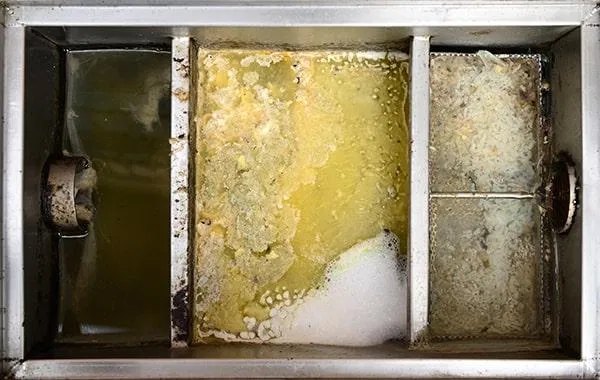
Stainless steel grease trap with baffles and compartments in a West Covina restaurant kitchen

Pump-out coming due? A single call puts you on the route.

Call (424) 573-8021

West Covina grease trap loads by neighborhood and cuisine

The Azusa Avenue corridor is the city's busiest stretch for Chinese and Taiwanese food: hot pot, beef noodle soup, dumpling houses, boba shops and Cantonese seafood rooms. Hot pot is a heavy load, because tallow-based broths go down the dish sink by the stockpot, and noodle starch binds with fat into a dense, sticky cap.

Plaza West Covina anchors the I-10 side of town with food court counters, sit-down chains and pad restaurants on Vincent Avenue. Food courts often share one large interceptor, so one tenant frying in volume can fill it for everyone. At The Lakes on Glendora Avenue, near the Civic Center, weekend crowds push burger grills and taprooms hard.

On the east side, Eastland Center mixes big-box retail with fast casual and Mexican kitchens, while the strip centers along Amar Road, Valinda Avenue and the South Hills edge carry Vietnamese pho shops, Filipino bakeries, taquerias and carnitas cooks. Pho stock leaves a thin, steady film of beef fat; carnitas lard is solid by the time it reaches the trap and settles hard against the outlet baffle.

Doughnut shops and bakeries are their own category. Shortening and buttercream wash off sheet pans every hour and harden fast in a small under-sink unit, so these shops do best on a short, predictable interval.
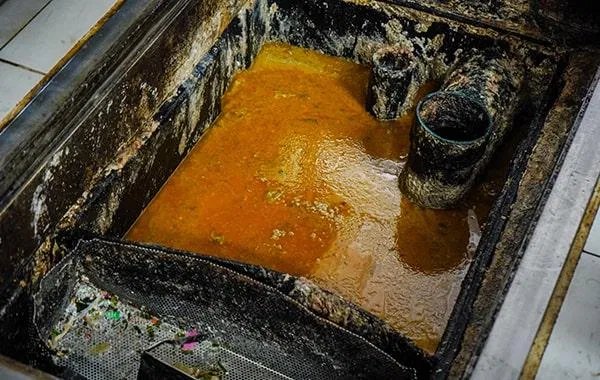
Open grease trap with orange grease layer and pipes at a West Covina noodle restaurant

Floor sink backing up mid-service? Trucks roll day and night.

Call (424) 573-8021

Heat, old laterals and hospital kitchens: the West Covina grease trap picture

Inland San Gabriel Valley summers run hotter than the coast, and warm wastewater lets grease emulsify and slip past the baffles. When Santa Ana winds dry things out and kitchens cut water use, fat is concentrated in less flow. Both conditions shorten the safe interval.

Much of West Covina was built out in the 1950s and 1960s, and many older strip centers still drain through clay or cast iron laterals with root intrusion and sags. Grease that slips through a full interceptor lodges in those low spots first. We look at the outlet tee and the first cleanout downstream, and if flow is sluggish we recommend grease interceptor cleaning with a full scrape rather than a quick pump.

Emanate Health Queen of the Valley Hospital runs a cafeteria and patient tray line that never fully shuts down, so service has to fit between meal periods without blocking ambulance routes. Banquet halls and the Big League Dreams concession stands see grease spikes after weddings and tournament weekends, and we plan visits for the morning after.

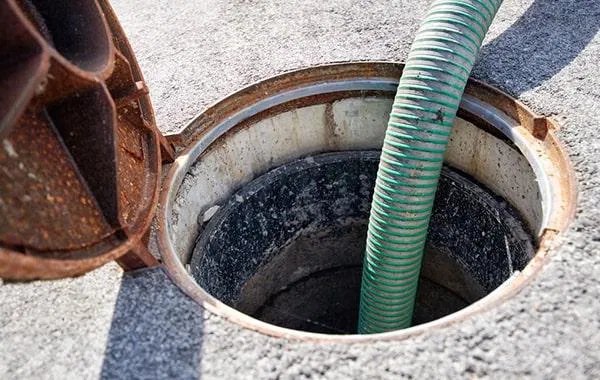
Manhole grease interceptor with green suction hose during service at a West Covina shopping center

FOG inspection on the calendar? Book the pump-out before it.

Call (424) 573-8021

What a West Covina grease trap visit includes

A grease trap cleaning visit starts at a time that suits your kitchen, often before lunch prep on Azusa Avenue or after close at the mall. The crew pumps every compartment to the floor, scrapes walls and baffles, and checks the inlet and outlet tees before the lids go back on.

You keep the manifest, and we note anything an inspector would flag, such as a cracked lid, a missing tee or a sink bypassing the device.

  • Measure grease cap and solids depth before pumping
  • Pump all compartments and scrape baffles and walls
  • Inspect inlet and outlet tees, lids and gaskets
  • Haul waste with a licensed liquid waste hauler
  • Leave a signed manifest for your FOG binder
  • Suggest the next interval based on measured buildup

Prefer service after closing? Overnight crews are standard.

Call (424) 573-8021

Grease Trap Pumping in West Covina, CA

For under-sink and floor traps in West Covina dumpling houses, boba shops, bakeries and taquerias, we pump every chamber dry, scrape the hardened cap off the baffles, and reseat the lid gasket. Small hydromechanical units fill quickly with shortening and broth fat, so we usually set short recurring intervals. Each pump-out comes with a manifest you can file for city or county inspectors.

How grease trap pumping works →

Grease Interceptor Cleaning in West Covina, CA

In-ground gravity interceptors behind West Covina strip centers and mall pads get a full cleanout: pumping, scraping walls and baffles, breaking up compacted solids, and checking outlet tees and riser condition. On older centers with aging laterals we look at the first downstream cleanout too. You get notes on any damage that could draw a citation during a FOG inspection.

How interceptor cleaning works →

Grease Interceptor Pumping in West Covina, CA

Large interceptors serving food courts, hospital kitchens and banquet halls in West Covina need scheduled pumping by vacuum truck. We size the truck to the tank, measure grease and solids against the 25 percent benchmark, remove the full volume, and record gallons on the manifest. Visits can be timed around mall hours, events and tray-line meal periods.

How interceptor pumping works →

Want a complete evacuation and a signed manifest? Give us a call.

Call (424) 573-8021

Our West Covina grease trap service area

We cover all of West Covina, from Plaza West Covina and the Vincent Avenue district by the 10 freeway to Eastland Center, The Lakes and the Civic Center on Glendora Avenue, the Azusa Avenue corridor, Amar Road, and the South Hills and Woodside Village neighborhoods. Morning and late-night windows are usually available.

Unsure how big your interceptor is? A technician can talk it through.

Call (424) 573-8021

Grease Trap Cleaning West Covina CA: frequently asked questions

Can my own staff pump out the interceptor behind our Azusa Avenue restaurant to save money?

Kitchen staff can skim and wipe a small under-sink trap between visits, but an in-ground interceptor is a different job. The waste has to leave in a licensed liquid waste hauler's truck with a manifest, and dumping it into a dumpster, storm drain or another sewer cleanout is a discharge violation. Inspectors look for that paperwork, and a self-cleaned interceptor leaves you without it.

Does a small coffee shop or doughnut bakery in a West Covina strip center need a grease control device?

Usually yes. Milk residue, shortening, glaze and buttercream all carry fat, and bakeries wash greasy sheet pans all day. Whether you need an under-sink HGI or a connection to a shared interceptor depends on your fixtures and plan check through the city and county health review. If you are taking over a former tea shop, confirm a device exists before opening.

Our dishwasher runs very hot; does that affect the grease trap at our Plaza West Covina restaurant?

It can. High-temperature dish machines and booster heaters push water near 180 degrees, which melts fat and carries it through the trap, where it cools and hardens in the line downstream. Many FOG programs ask that very hot water not pass through grease devices. Routing the dish machine correctly and pre-scraping plates keeps the food court interceptor working.

Do restaurants in West Covina need an LACSD industrial wastewater discharge permit?

Most do not. The Sanitation Districts list restaurants among exempt categories, but LACSD makes the decision for each facility, and the exemption does not cover a business that has caused sewer problems. Permits here are issued jointly with the city, so applications start at City Hall. Exempt or not, the grease discharge prohibitions still apply.

West Covina restaurants aren't named in WQ 2022-0103-DWQ, so why should owners care about it?

The State Water Board order applies to sewer owners, not directly to restaurants, but it requires them to run a FOG control element in their sewer system management plan. That is why local agencies inspect kitchens, ask for manifests and push BMPs. When a sewer spill traces back to a grease plug, the owner is expected to follow up with the source.

We run a hot pot restaurant on Azusa Avenue; why does our trap fill so much faster than the bakery next door?

Hot pot broths are built on beef tallow, chili oil and bone stock, and every table's leftover pot goes into the dish sink. That is far more liquid fat per seating than a bakery produces. Expect to service a hot pot kitchen two or three times as often, and strain broth before it reaches the sink.

Who services the shared interceptor at Eastland Center, the landlord or each tenant?

It depends on your lease. Many centers contract pumping for a shared interceptor and bill tenants through common area charges, while others assign it to the heaviest user. Either way, every tenant can be cited if grease backs up. Ask your property manager for recent manifests so you know the interceptor is on a real schedule.

Can you work around meal service at Emanate Health Queen of the Valley Hospital or other healthcare kitchens?

Yes. Hospital kitchens run patient trays, a cafeteria and staff meals almost continuously, so we schedule pumping in the quiet window between breakfast cleanup and lunch production or late at night. We coordinate truck placement with facilities staff to keep emergency access clear and leave the manifest with the engineering office.

Why does summer heat in West Covina change how often we should pump?

The San Gabriel Valley often runs well into the 90s and beyond in summer, and warm wastewater keeps grease in suspension longer. More of it slips past the outlet baffle before it separates. If your trap is near the 25 percent line in spring, it will likely cross it sooner in July and August, so move visits up.

Our building near The Lakes dates from the 1960s; can old laterals cause backups even after pumping?

Yes. Older laterals in West Covina are often clay or cast iron with roots, cracks and sags where grease that escaped earlier has built up. Pumping clears the interceptor but not the pipe beyond it. If drains stay slow after service, the lateral likely needs hydro jetting by a plumber, and we will tell you what we saw at the outlet.

Which records should a West Covina kitchen keep in its FOG binder?

Keep every service manifest, any repair invoices for the trap or interceptor, your staff BMP training sign-in sheets, and receipts from your used cooking oil recycler. Inspectors from the city or county health department may ask to see them without notice. We recommend holding at least three years of paperwork at the restaurant, not at a home office.

Do Filipino and Vietnamese kitchens in West Covina need special attention for fried foods?

Deep frying for lechon kawali, lumpia, chả giò and fried fish produces oil that belongs in a rendering bin, not the sink. The trouble comes from fryer baskets and splatter washed down after service. Wipe pans with paper before washing, keep fryer oil in the recycling container, and expect more frequent pumping during holiday party orders.

Truck, crew and manifest, all arranged in one phone call.

Call (424) 573-8021

Grease trap service in cities near West Covina

We also provide grease trap cleaning and interceptor pumping in the neighboring San Gabriel Valley and Pomona Valley cities listed below.

Sinks draining slowly at the dish station? Call before it overflows.

Call (424) 573-8021
Call now